Advaita & Dharma
 Contributor: Vidyaranya Murthy, reviewed by Southwala Editorial Desk
Advaita, Adi Shankaracharya, the Upanishads and what Sanatana Dharma means.

Searching for the meaning of life: what the old teachers answered
What is life for? The Indian tradition gave four answers: dharma, artha, kama and moksha. How to use them when you are lost, and what Shankara said about the rarest gift.

Searching for a guru: how to find one and how to know a real one
Everyone wants a guru, and plenty of people are happy to play the part. What the old texts say a teacher should be, what to look for, the warning signs and how to begin.

Vikarna: The Kaurava Who Spoke Up for Draupadi
In the dice hall, Vikarna questions the treatment of Draupadi even though he belongs to the Kaurava family.

Tara: The Queen Who Warned Vali Before His Final Battle
Tara understands the danger behind Sugriva's return and warns Vali, but her advice is ignored in the Ramayana.
Yuyutsu: the one Kaurava who walked across to the Pandavas
Just before the war, Yudhishthira called out that anyone could still change sides. One of Dhritarashtra's sons accepted. The little-known story of Yuyutsu.
The squirrel and Rama's bridge: where the story really comes from
Everyone knows the squirrel with three stripes on its back. But it is not in Valmiki. A look at what the Ramayana says about the bridge, and where the squirrel story lives.
Searching for peace: why it keeps running away
You think peace will come once the exam, wedding or loan is over, and it doesn’t. What the Gita and Upanishads say about a peace that does not depend on events.
Kanakadhara Stotram: the day young Shankara made it rain gold amla
A poor woman gave a young Shankara the only thing she had, a dried amla fruit. His hymn to Lakshmi is said to have rained golden amlas on her house. The story and the hymn.

Sanjaya: the charioteer who watched the whole war from a distance
Vyasa offered the blind king sight. He refused. So Sanjaya got it, and the Bhagavad Gita reached us through his mouth. The first live commentator in the world?

The ten principal Upanishads: a beginner’s map
Upanishads are the last part of the Vedas and the source of Vedanta. The ten that Shankara wrote on, with one line on what each is about.

Vibhishana: the brother who left Lanka and the vow Rama made
Ravana's younger brother told him to return Sita, was insulted, and walked out. Rama's army doubted him. Why Rama welcomed him, and the famous verse of refuge.
Astika: the boy who stopped a sacrifice and saved the snakes
Janamejaya set out to destroy every snake to avenge his father. A young sage asked for one boon. The story behind Naga Panchami and Nagula Chavithi.

Why me? When you pray and it seems nobody is listening
Years of prayer, vows kept, lamps lit, and still no change. What Krishna says about the distressed devotee, and the stories of Gajendra, Draupadi and Prahlada.
Trijata: the rakshasi in Ravana's garden who dreamed of Rama
Sita sat among fierce guards in the Ashoka grove. One of them, an old woman, woke up with a dream and told the others to be kind. The story of Trijata.

Read the line: Taittiriya Upanishad, speak the truth, do your duty
A teacher's farewell speech to students over two thousand years ago: speak the truth, follow dharma, honour your mother, father, teacher and guest. Read it word by word.
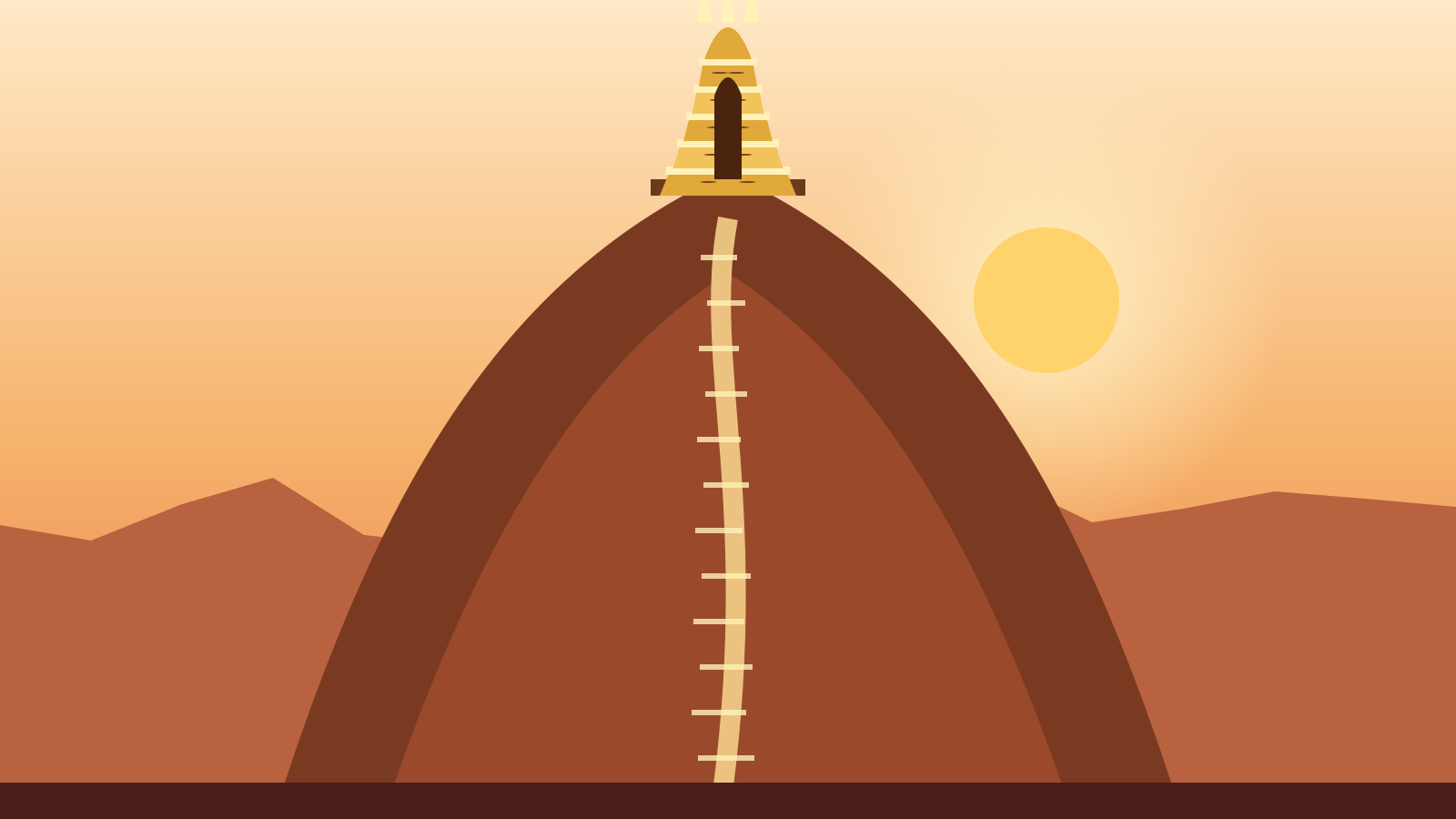
Shankara’s four mathas: Sringeri, Dwaraka, Jyotirmath and Puri
Adi Shankaracharya set up four monasteries at the four corners of India. Where each is, which Veda it follows and what its teaching is.
Ghatotkacha: the night Krishna smiled as the Pandavas wept
Bhima's son fell on the fourteenth night of the war and the Pandavas wept, but Krishna was relieved. Why Karna's one great weapon was spent on the wrong target.

Why me? When everyone around you seems to be doing better
Friends buying houses, cousins getting promoted, and your own life standing still. What the Mundaka Upanishad, the Gita and Karna can teach about comparison.
Sampati: the vulture who lost his wings and showed where Sita was
Jatayu's elder brother, burned by the sun, sat on a mountain for years. How he spotted Sita from a hundred yojanas away and got his wings back.

Yaksha Prashna: the questions Yudhishthira answered at the lake
The Yaksha Prashna from the Vana Parva: four brothers fall at a poisoned lake, and Yudhishthira answers the Yaksha's questions and the greatest wonder.
Read the line: Katha Upanishad, arise, awake, and understand
Arise, awake is Vivekananda's famous call, but the original verse says more. Read Katha Upanishad 1.3.14 word by word, including the line about the razor's edge.

Vidura Niti: what Vidura told Dhritarashtra on a sleepless night
The night the blind king could not sleep and sent for Vidura: who is wise, who is a fool, what anger and greed cost, and why the king's heart did not follow.
Mudgala: the sage offered heaven who asked what the catch was
A poor sage who lived on gleaned grain gave away his meals to guests. The gods sent a chariot. He asked what happens after, and said no thank you.
Shakuni: the man who never forgave
Who was Shakuni of Gandhara, why the marriage of his sister Gandhari mattered, and what the Mahabharata really says about the dice, apart from the popular folk image.
Shankara, Ramanuja and Madhva: three ways to understand God and the soul
The three great teachers of Vedanta read the same texts and reached different answers. How Advaita, Vishishtadvaita and Dvaita differ, in plain words.
Rukmi: the king both sides turned away
Rukmini's proud brother Rukmi offered his army to the Pandavas and then to Duryodhana, and both said no. The story of pride, an old grudge and a wedding that went wrong.
Shabari: the old woman who waited for Rama at Pampa
A forest woman who had waited for years in the hermitage of Matanga, because her teachers promised Rama would come. What Valmiki says, and what later retellings added.

Kanika Niti: the minister who taught Dhritarashtra to be ruthless
Kanika Bharadvaja's cold advice to Dhritarashtra in the Adi Parva, set beside Vidura's counsel, and why the Mahabharata keeps both voices in the same book.

Why me? When you are blamed for something you did not do
Rumours, a false accusation, a name dragged through mud. Krishna himself was accused of stealing a jewel, and Sita and Draupadi faced worse. What the stories teach.
Gandhari's blindfold: why she chose the dark
Why Gandhari bound her eyes on marrying a blind king, what the tradition says the blindfold meant, and how it ends in her curse on Krishna after the war.
Karna, Bhanumati and the broken necklace: why Duryodhana trusted him
A popular regional story says Duryodhana found Karna holding his wife's pearls and chose trust over suspicion. What the epic says and what later tellings add, and why Karna stayed to the end.

Yoga Vasistha: the story of Queen Chudala
The Yoga Vasistha is the long Advaita text Vasishtha tells Rama. Read the story of Queen Chudala, who taught her own husband the king, and what the text is.
Urmila: the sister who slept so Lakshmana could stay awake
Sita's sister Urmila, wife of Lakshmana, waited fourteen years. The sleep legend from later retellings, what Valmiki says, and the poets who gave her a voice.

Ravana chained the nine planets: the story of Meghanada's birth and Shani's move
The folk story of how Ravana held the Navagrahas captive to make his son Indrajit immortal, how Shani's glance spoiled the plan, and what the tale means. Not in Valmiki.
Draupadi's questions in the court, and the answer she never got
In the Sabha Parva Draupadi asked whether Yudhishthira could stake her after losing himself. Read what the elders said, why Bhishma called dharma subtle, and what it asks of us.

What does Sanatana Dharma mean? Where the phrase comes from
Sanatana Dharma means the eternal order or duty. Where the phrase appears in the old texts and how it came to name the Hindu tradition.

Vasishtha and Vishvamitra: the quarrel that made two sages
The old quarrel of two sages: a king, a wish-granting cow, Trishanku, Menaka, and a title won at last. What it teaches about effort, ego and Vasishtha's courtesy.

King Shibi and the dove: the man who weighed his own flesh
A hawk, a dove, and a king who would not give up a refugee. Shibi cut his own flesh to balance the scales. The story is in the Mahabharata and has an echo in the Ramayana.
Ravana the scholar: what tradition says he knew
Ravana is called learned in the Vedas, a master of the veena, and the author of many works in tradition. What Valmiki says, what later tellings add, and why learning is not character.
Why me? When marriage or children are delayed for years
Family asks, neighbours talk, and the wait goes on. What Dasharatha, who waited long for sons, teaches, and how to hold your peace while praying and seeking help.
Dhritarashtra: the blind king who chose not to see
Dhritarashtra's blindness, his love for Duryodhana, his questions to Sanjaya, Vidura's warnings and the iron Bhima: what the Mahabharata asks of a parent who will not look.
Kabandha: the cursed demon who pointed Rama to Sugriva
A terrible creature, all arms and one huge mouth, who caught Rama and Lakshmana in the forest. Why Rama was glad to be caught, and what the freed Kabandha told him.

Read the line: Asato ma sad gamaya, lead me from the unreal
A prayer from the Brihadaranyaka Upanishad that millions know by ear. Read it word by word: from the unreal to the real, from darkness to light, from death to immortality.

Valmiki: the hunter who became the first poet
Valmiki, the adi kavi: the Ratnakara story and its later origin, the krauncha bird and the first shloka, what he says of himself, and his ashram where Sita found shelter.
Ravana and Shiva: the Tandava Stotram and the lifted mountain
Ravana was a devoted worshipper of Shiva and also a proud king who tried to lift Kailasa. What tradition says about the mountain, the hymn and how both fit in one man.
Why do bad people prosper while good people struggle?
Draupadi asked this very question in the forest. What Yudhishthira answered, what the Gita says about those who gain wealth by wrong means, and how to keep your peace.
Barbarika: the boy who could have ended the war in a minute
Barbarika, Ghatotkacha's son in folk and Skanda Purana tradition, his three arrows, Krishna's request for his head, and the Khatu Shyam temple in Rajasthan.

Vidura: why Krishna skipped the palace feast and stayed with him
Krishna came to Hastinapura as the Pandavas' envoy and refused the palace banquet. He ate at the humble house of Vidura. What the epic says, and what folk tradition adds.

Narada: the sage who carries news and trouble
Narada, the wandering sage with the veena: his role in the Ramayana and Bhagavata, the Bhakti Sutras attributed to him, and why his mischief always ends in dharma.
Ravana the Shiva bhakta: hymns, the Atmalinga and how Rama honoured him
Ravana's devotion to Shiva: Kailasa, the Tandava Stotram, the Atmalinga at Gokarna, and what Valmiki says Rama did and said when Ravana fell. Sources named, folk versions marked.
Jatayu: the old bird who fought Ravana and died in Rama's lap
He was Dasharatha's friend and an old bird, with no hope of winning. Why Jatayu fought Ravana anyway, how Rama honoured him, and where Lepakshi remembers him.
Kaikeyi and Manthara: how a good queen took the wrong turn
Kaikeyi loved Rama before Manthara whispered in her ear. The two boons, her regret, Bharata's refusal, and what the story says about advice that undoes a mind.

Why me? I worked so hard and still did not get the result
The exam, the job, the business, the long wait. What the Gita says about effort and result, and how Shabari, the Pandavas and Rama kept going when nothing came.
Balarama: the brother who stayed out of the Kurukshetra war
Why Krishna's elder brother Balarama went on pilgrimage instead of fighting at Kurukshetra, his love for Duryodhana and Bhima, and his anger at the mace duel.

Maya: is the world an illusion? What Advaita actually says
People say Advaita calls the world an illusion. That is not quite right. What Maya means, with the rope and snake example that Shankara used.

Avadhuta Gita: the songs of a man beyond rules
The Avadhuta Gita, attributed to Dattatreya, is the most uncompromising Advaita text. Who an avadhuta is, what the tone is, and how to read it without confusion.
Indrajit and Sulochana: the warrior and the wife who followed him
Indrajit, Ravana's mighty son, his boon, the Nikumbhila yajna and his death at Lakshmana's hands, and the regional tradition of his wife Sulochana and Dutt's sympathetic poem.
Uttanka: the sage who shouted at Krishna and refused nectar
Uttanka reproached Krishna for not stopping the war. Krishna showed him the universal form and gave a boon of water. Then a hunter with dogs offered him nectar.
Ashvatthama: the warrior who was cursed to wander
Drona's son, the night attack on the Pandava camp, the Brahmashira weapon, Krishna's curse and the jewel taken from his forehead, and what the Chiranjivi tradition says.

Read the line: Isha Upanishad 1, enjoy by letting go
The first verse of the Isha Upanishad says the world is covered by the Lord, so enjoy it by renouncing, and do not covet. Read it word by word and see its wide meaning.
Agastya: the sage who drank the ocean and carried the South
Who was Sage Agastya? The bowed Vindhya, the drunk ocean, Lopamudra, Tamil and Siddha tradition, and his gifts to Rama in the Ramayana, told simply.
Sharabhanga: the sage who put off heaven to see Rama
Indra came to take him to the world of Brahma. Sharabhanga said, wait, Rama is coming. What the old sage did when Rama finally arrived, and what it tells us about waiting.
The Atmalinga of Gokarna: the lingam Ravana could not carry home
The Gokarna legend of the Atmalinga, a boy who was Ganesha, and a lingam set down on the earth. A sthala-purana story, with where tellings differ and how to visit.

Why me? When death takes someone you love too soon
No answer takes grief away. But Yudhishthira, Dasharatha, Arjuna and Krishna all stood where you are standing. What the old texts say about loss, and what helps.

Ashtavakra Gita: the dialogue with King Janaka, in plain words
What the Ashtavakra Gita is, how Sage Ashtavakra answers King Janaka on freedom and self-knowledge, how it differs from the Bhagavad Gita, and where to begin reading.

Nirvana Shatakam: “I am not the mind”, meaning verse by verse
Shankara is said to have sung these six verses at the age of eight when his teacher asked who he was. The meaning of each in plain words.

Ashtavakra: the boy with eight bends who out-argued a court
He corrected his father from the womb, was born crooked, and at twelve walked into King Janaka's court and defeated the man who had drowned his father.
Why me? When your own family is the one that hurts you
A brother, a parent, a spouse. When pain comes from your own people it cuts deepest. What Rama, Prahlada, Vibhishana and the Pandavas teach about family that fails us.
Anasuya and Sita: the garland an old sage woman gave in the forest
On the way to Chitrakuta, Sita met Anasuya, wife of Sage Atri, who had once brought a river to a dying forest. What she gave Sita, and what she taught her.

Why me? When illness strikes a person who lived rightly
You ate well, you prayed, you tried to live right, and then the diagnosis came. What the Gita says about the body, and what Ramakrishna and Ramana teach about illness.

Bhaja Govindam: Shankara’s song for the confused mind
Bhaja Govindam is one of the most sung hymns in India. The story of how it began in Varanasi and what its best-known verses say.
Ekalavya: the archer who gave his thumb, and why it still stings
He learned archery from a clay image of Drona and gave his right thumb as the fee. The Mahabharata tells it without softening, and so should we. Source and meaning.
Guha: the boatman king who sat awake all night guarding Rama
On the first night of exile, Rama slept on the bank of the Ganga while a tribal king kept watch. The story of Guha, his friendship, and his suspicion of Bharata.

Why me? I am a good person, so why am I suffering?
You pray, you do right by people, and still life hits you. What the Gita, the Upanishads and the epics say, and the five ways the tradition looks at your pain.

Adi Shankaracharya: the boy from Kaladi who walked across India
Born in a small village in Kerala, Shankara became a monk as a boy, studied by the Narmada, argued with the best scholars in India and set up four monasteries. His story.

Advaita Vedanta in plain words: you are not separate from the whole
Advaita says the self inside you and the ultimate reality are one. What that means, how it differs from belief in a God out there, and how people actually practise it.