Urmila: the sister who slept so Lakshmana could stay awake
Sita's sister Urmila, wife of Lakshmana, waited fourteen years. The sleep legend from later retellings, what Valmiki says, and the poets who gave her a voice.

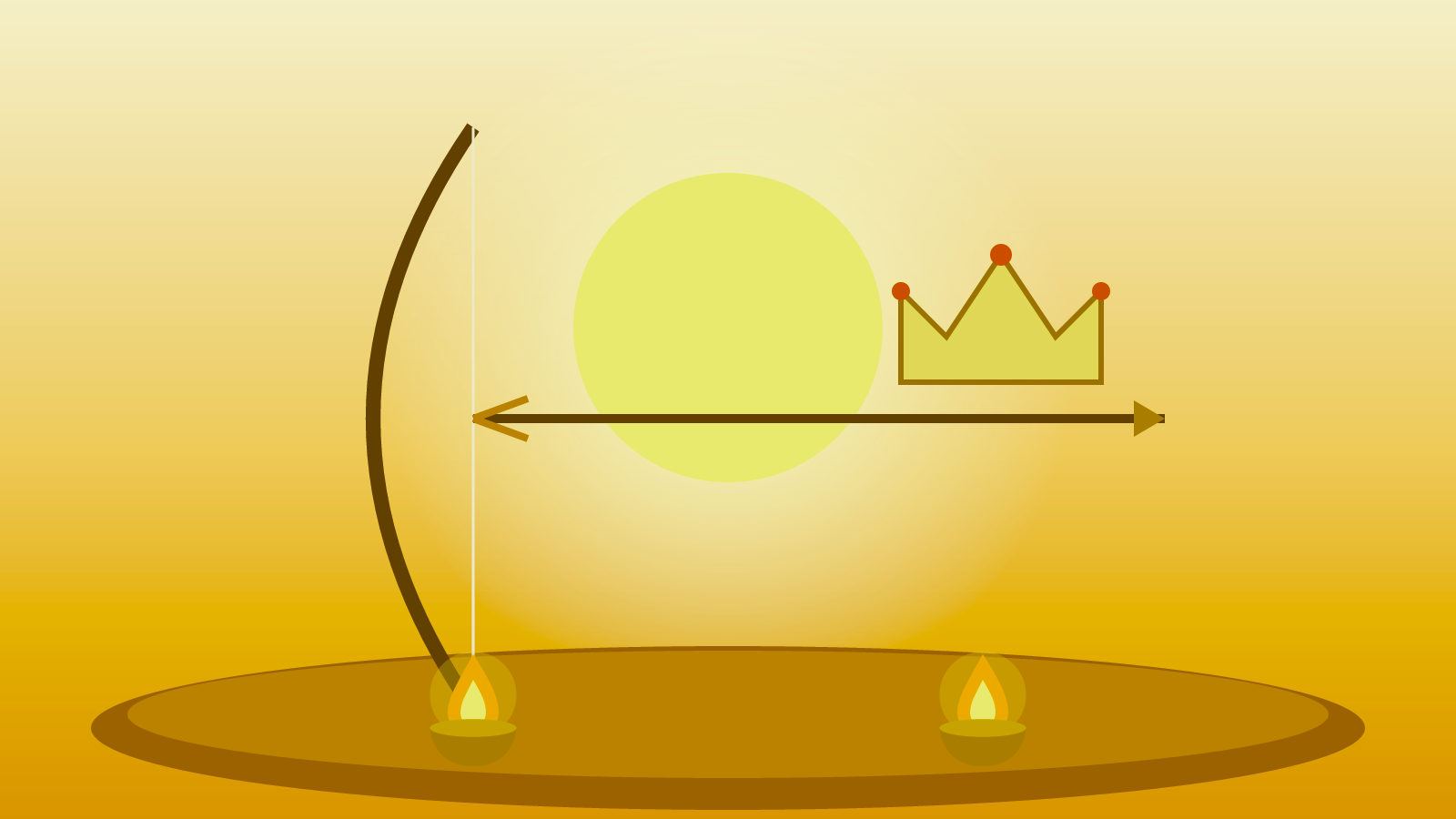
ఊర్మిళ సీతమ్మ చెల్లెలు, లక్ష్మణుని భార్య; వాల్మీకి ఆమె గురించి తక్కువగా చెబుతాడు. పద్నాలుగు సంవత్సరాలు ఆమె నిద్రపోయి లక్ష్మణుడు మేల్కొని ఉండగలిగేలా చేసింది అన్న కథ తరువాతి కావ్యాల్లోనిది.
When the family celebrates the one who went away, who thinks of the one who stayed behind? We praise the soldier and forget the person who kept the lamp lit at home. Urmila (ఊర్మిళ) is the Ramayana’s answer to that question, and strangely, she is almost silent.
What the old text gives us
Urmila is the daughter of King Janaka of Mithila, the younger sister of Sita. In the Bala Kanda of Valmiki, at the great wedding, the four sons of Dasharatha marry four women of Janaka’s house: Rama marries Sita, and Lakshmana marries Urmila. Bharata and Shatrughna marry Mandavi and Shrutakirti, Janaka’s nieces, daughters of his brother Kushadhvaja, according to the usual telling.
After that, Valmiki says very little about her. When Lakshmana follows Rama into the forest, she does not go. The text does not give her a speech of farewell. Many readers have asked: why?
The sleep legend
A beautiful tradition fills the silence. It says that Lakshmana, setting out for the forest, decided that he would never sleep for fourteen years, so he could guard Rama and Sita night and day. Because sleep cannot simply be refused, he is said to have prayed to Nidra Devi, the goddess of sleep. She agreed, but on one condition: someone else must take his share.
The person who took it was Urmila. Tradition says she slept through the fourteen years in Ayodhya, so that her husband could remain awake in the forest. When he returned, the sleep was given back.
This is from later retellings and regional folk tradition, not from Valmiki. It is one of those stories that the people made because the epic seemed to have left a person out. There are different versions of it, and some tell it with Lakshmana asking his wife directly, and I would not claim one is the original.
What the poets did with her
Kamba, the Tamil poet, and several Telugu and other regional writers give Urmila a few touching lines or scenes. Different poets treat her as sorrowful, as proud, or as someone whose strength is hidden.
In the twentieth century, Mythili Sharan Gupt wrote his Hindi poem Saket, in which Urmila’s long waiting is given real space and feeling. That is true and well documented. It is part of a modern effort to find the women in the epic who have no stories of their own.
The quiet kind of sacrifice
There is a kind of sacrifice no one thanks you for. It is not dramatic. You are not exiled. You are simply left in a house, with a duty, and you do it, and the years pass.
Do you know someone like that? A spouse who stays back when the other goes overseas to earn. A daughter-in-law who runs a house so a husband can do his work. A sibling who looks after the parents while others get on. They are not in the epic, but they are in Urmila’s line.
Notice too that Urmila’s waiting has a place in a story of brothers. The Ramayana is full of brothers who give things up: Bharata who refused the throne, Lakshmana who left a home. The one who gave up the most in silence is perhaps the wife. For another figure the epic treats briefly but warmly, see Shabari, who waited for Rama at Pampa.
How a family might remember her
Some families light a small lamp on a day of the Ramayana reading and name the people who were left behind in the story, Urmila among them. There is no fixed ritual that I can point to in a text. It is a simple gesture: a lamp, a moment, a name. If you read the Ramayana at home, you could pause at the Bala Kanda wedding and again at the return to Ayodhya, and notice who is missing.
Why the silence may be the point
Some readers ask whether it is unfair that the epic says so little about Urmila. Another way to read it is that the silence is part of the portrait. The quietest sacrifices leave the least record.
There is a further thought. When Lakshmana returns, the sleep tradition says there is no complaint from Urmila. The story honours endurance, but it is worth asking whether it also asks too much. A good reader holds both. Admire her, and also ask whether the people around you are being asked to be silent for too long. Gratitude, said aloud and in time, is a kind of dharma that costs very little. Think of one person in your house this week who would be surprised to hear you say thank you, and consider saying it plainly, with no occasion attached.
Where this comes from
Urmila’s marriage to Lakshmana is in the Bala Kanda of Valmiki’s Ramayana. The sleep tradition and Nidra Devi are from later retellings and folk tradition, and are not found in Valmiki, as far as tradition and scholars say. Regional poets, including Kamba and Telugu writers, mention her with differing emphasis. Mythili Sharan Gupt’s Saket is a twentieth-century Hindi composition.
A question to carry
Who in your own home has been waiting and keeping the lamp lit, and have you ever told them you noticed?
If your family has a song, a proverb or a story about Urmila, write to hello@southwala.com.
Quick answers
Who was Urmila in the Ramayana?
She was the daughter of King Janaka, sister of Sita, and wife of Lakshmana. She stayed in Ayodhya while Lakshmana went to the forest.
Did Urmila sleep for fourteen years?
This is a story from later retellings, not from Valmiki. Tradition says she took Lakshmana's share of sleep so that he could remain awake on guard.
Who is Nidra Devi in the Urmila story?
Nidra Devi is the goddess of sleep. In the legend, Lakshmana asks her for freedom from sleep for fourteen years, and she agrees if someone else takes it.
Which poets wrote about Urmila?
Regional poets in several languages have, and Mythili Sharan Gupt wrote about her in his twentieth-century Hindi work Saket.


