Ram Raksha Stotra: the prayer that guards the body part by part
What the Ram Raksha Stotra is, why it protects the body limb by limb, who is said to have composed it, and a simple way to recite it at home, with the closing Rama Rama verse.

It is early morning, and an elder in the house is sitting on the floor with a small book, reading in a low steady voice. The words are Sanskrit, and the pace is that of someone who has done this for years. Ask what the book is, and there is a good chance the answer is the Ram Raksha Stotra, the prayer many families begin the day with.
What the name means
Raksha means protection, and a stotra is a hymn of praise. So the Ram Raksha Stotra is a hymn that asks Lord Rama to protect. It is a short text of about forty verses, written in the simple anushtubh metre, which makes it easy to learn and to chant.
Who composed it
Tradition attributes it to a sage named Budha Kaushika (sometimes written Bhudha Kaushika), and holds that it was revealed to him in a dream by Lord Shiva, who told him to write it down on waking. This is the tradition’s own account. We do not have reliable dates for the author, and different families tell the story with small differences. It is an honest answer to say that we know the text well and its author through faith.
The idea of a kavacha
A kavacha is armour. The heart of the stotra works like this: the devotee names a part of the body, and asks Rama in one form or another to guard it. The tongue, the face, the hands, the heart, the navel, the thighs, the knees, the feet. Rama’s names are placed over the body like pieces of armour, one by one, until the whole person is covered.
You may find this a strange thing to ask of a hymn. Think of it as a morning ritual of attention. When you say ‘may Rama guard my hands’, you remember what your hands will do that day. Whatever else it does, it is a prayer, not a guarantee, and no text promises you a life without difficulty. The tradition teaches that the Lord’s name is a refuge, and it is in that spirit that the stotra is recited.
How to recite it
There is no complicated procedure. A simple way:
- Bathe, or at least wash your face and hands, and sit facing east if you can.
- Light a lamp in front of a picture of Rama, Sita, Lakshmana and Hanuman.
- Take a breath, bow to the picture, and begin with the opening verses.
- Read slowly and aloud, or in a murmur. Do not rush.
- At the end, bow again, and offer whatever you have: a flower, a spoon of sugar, or only your attention.
Morning is the habit for most families, since the prayer is a preparation for the day. Some people recite it eleven times, and a few do so for a fixed number of days. Many others read it once, and that is perfectly fine. If you are short of time, one reading with attention is worth more than eleven in a hurry.
You can read in Devanagari, Telugu, Tamil or English letters; whichever helps you pronounce it better. Telugu readers may like to see the name written as శ్రీ రామ రక్షా స్తోత్రం. Many families keep a printed booklet at the puja shelf.
What the verses say
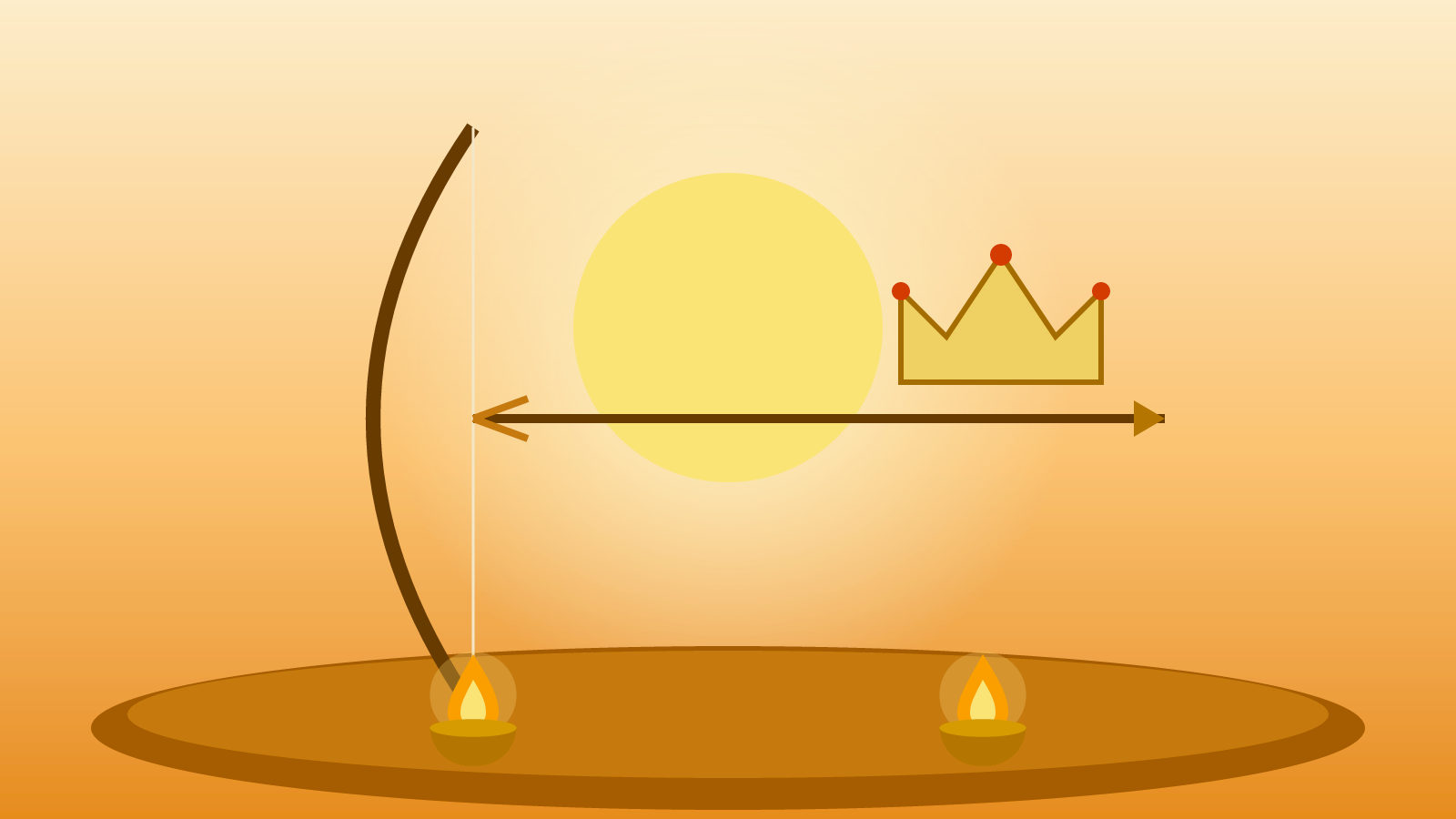
The opening verses tell of the dream and name the deity: Rama, with the bow, with arrows, the lord of Sita, dark as a fresh blue lotus, wearing matted locks. The middle verses are the body prayer described above, and they also bring in the other members of the family, so that Lakshmana, Sita and Hanuman stand around the devotee as guardians too. The later verses speak of the fruit of reciting, in the language of tradition: that one who keeps this armour is surrounded by Rama’s grace. Read those lines as an expression of trust and not a contract. A person of faith recites it, then goes out and does the day’s work with an easier mind.
The closing verse
The most loved line is near the end:
Sri Rama Rama Rameti, rame rame manorame, sahasranama tat tulyam, Rama nama varanane.
Tradition holds that this verse comes from a conversation between Shiva and Parvati, in which Parvati asks Shiva for a short way to chant the thousand names of Vishnu (the Vishnu Sahasranama). Shiva replies that to say ‘Rama’ three times, in the form of this verse, equals the thousand names. The idea is that in the sound ‘Ra’ and ‘Ma’ the whole name of the Lord is held. Whether you see this as numerology or devotion, many households use the verse on its own: after meals, before a journey, or at any time they need quiet.
For more on the Lord and his journey, you may like why Rama is called Maryada Purushottam, and for the festival of his birth see the dates for Rama Navami on our festivals page. The great Rama temple of the South is described in Rameswaram, where Rama prayed to Shiva.
What not to worry about
You do not need initiation to recite this stotra, though some families like to receive it from an elder. You do not need to understand every word on the first day; the meaning comes with repetition. If you miss a day, you have not lost anything. Simply begin again.
If someone in your household has a special way of reciting it, such as with a certain tune or on Saturdays or Tuesdays, write to hello@southwala.com and share it, so that others may learn.
Quick answers
Who wrote the Ram Raksha Stotra?
Tradition attributes it to Budha Kaushika, also called Bhudha Kaushika, and says it was revealed to him in a dream by Shiva. Scholars do not agree on his dates, so treat the story as tradition.
How many times should the Ram Raksha Stotra be recited?
Once a day is enough. Some people recite it eleven times on special occasions, but there is no strict rule, and a single sincere reading is fully valid.
What is the best time to recite it?
Morning after bath is the common habit, before the day begins. If that is not possible, any calm time, even in the evening, is fine.
Do I need to know Sanskrit to recite it?
No. You can read it in Telugu, Tamil or English script and learn the meaning slowly. Sincerity matters more than perfection, though gentle effort at pronunciation is a good practice.