Kalabhairava: the fierce guardian of time and of Kashi
Kalabhairava is the form of Shiva who guards Kashi and rules over time. The story, the Ashtami worship and why people offer him black sesame and dogs are fed.

Ask anyone who has been to Varanasi about the city’s guardian and they will say Kal Bhairav. Nobody enters the city without paying respects to him, they say, because he is the kotwal, the police chief of Kashi.
Who is he?
Kalabhairava, also just Bhairava, is a fierce form of Shiva. Bhairava is often explained as the one who is beyond fear or the one who makes fear itself afraid. Kala means both time and death. He is the lord of time, who guards the cycle of birth and death.
The story
The Puranas tell the story in more than one way. In the most common telling, Brahma, who had five heads, grew proud and claimed to be supreme. Shiva created Bhairava from his anger, and Bhairava cut off Brahma’s fifth head.
The skull stuck to his hand as the mark of the sin of killing a Brahmin. Bhairava wandered the world with it, begging, until he reached Kashi, where the skull fell from his hand and he was freed. He stayed there as the guardian. We told the longer version in our karma story on Shiva and the skull.
What he looks like
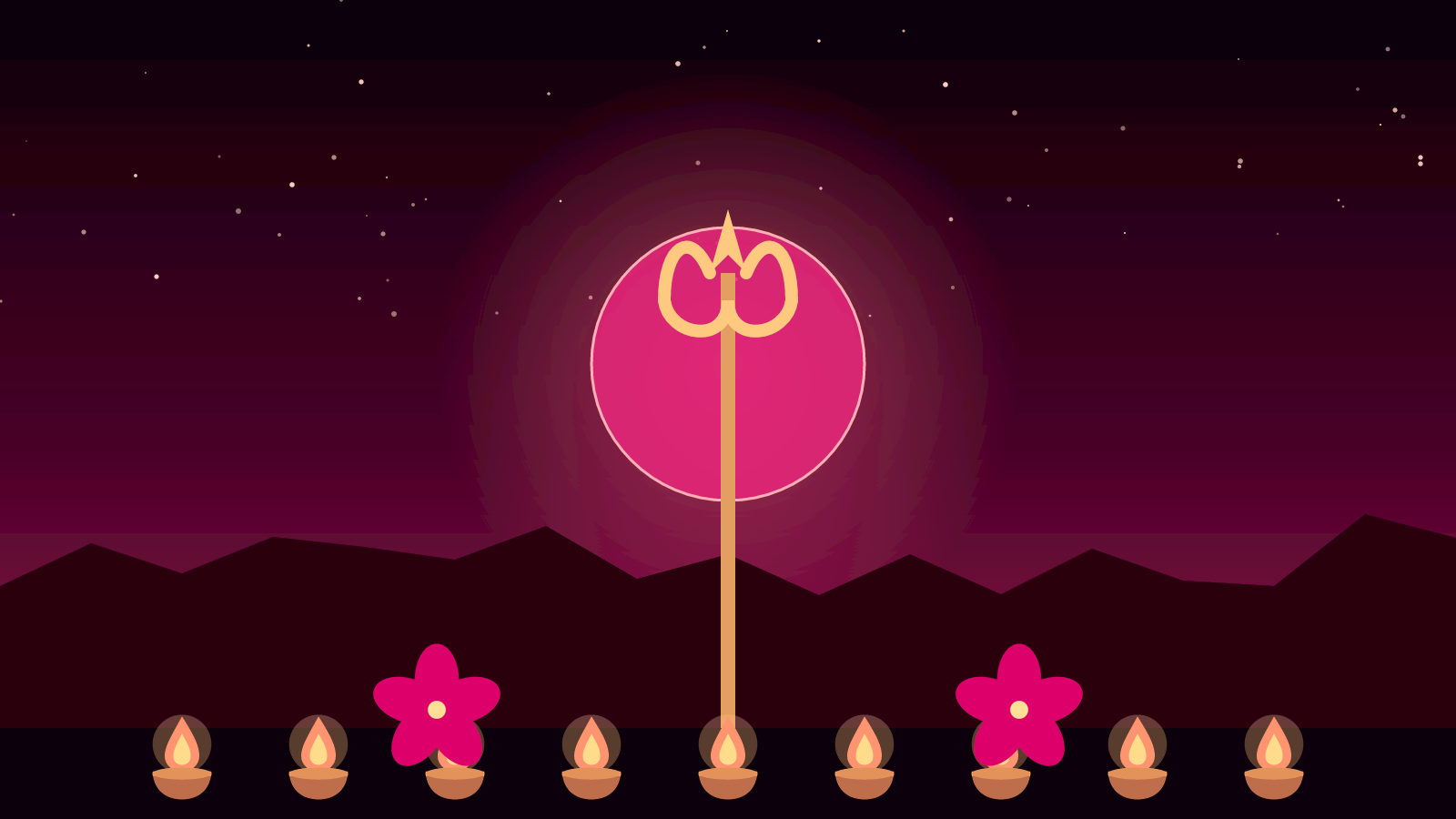
Bhairava is shown dark and fierce, with a trident, a damaru drum, a skull cup and a dog beside him. The dog is his vehicle, and many families feed dogs on his days. His fierce look is protective. To his devotees he is the one who watches the door.
When people worship him
The special day is Kalashtami, the Ashtami of the dark fortnight each month. The Ashtami of the dark fortnight in November or December is the big one, called Kalabhairava Jayanti or Kalabhairavashtami. Sundays and Tuesdays are also his days in many traditions.
Common offerings include black sesame, oil lamps, urad dal vada and a garland of red flowers. People pray to him for protection from fear, legal trouble and bad influences, and for safe travel.
The temples
The Kal Bhairav temple in Varanasi is the guardian of the city. The Kal Bhairav temple in Ujjain is known for the tradition of offering liquor, which the deity is believed to accept. Many Shiva temples across the South have a Bhairava shrine of their own, and in some of them the keys are traditionally handed over to Bhairava at night, as if to the guard who keeps watch till morning.
A verse to know
The Kalabhairava Ashtakam, a set of eight verses traditionally attributed to Adi Shankaracharya, begins by describing him as the lord of Kashi, worshipped by the gods. If you want to read his story along with Shankara’s own verses, this is the one.
A caution
You will see Bhairava worship linked with tantric practices in videos and articles online, and it makes the god sound more dangerous than most families treat him. Most families do nothing so dramatic: a lamp, black sesame, feeding a dog and a short prayer on Kalashtami is the usual form. If you are curious about stricter practices, speak to a teacher rather than copying something you read online.
A closer look at the eight Bhairavas
Tradition speaks of eight forms of Bhairava, the Ashta Bhairavas, often listed as Asitanga, Ruru, Chanda, Krodha, Unmatta, Kapala, Bhishana and Samhara. Each is linked with a direction. Kalabhairava is the form most families know, and he is the one the Kashi story is about. You will also meet Bhairava as a protector in the Shakta tradition, where he stands beside the goddess as the guard at her gate. If you want to read about the fierce and the tender sides of the Mother herself, see Kali.
Questions people ask
Why is a fierce god the guardian of a gentle, holy city? A door needs a watchman. The tradition pictures Kashi as the place where Shiva himself lives, and Bhairava as the one who keeps order at its gate. The fierceness is turned outward, towards harm, and not towards the devotee.
Why do people feed a dog on his day? The dog is his companion. Feeding a hungry animal is a simple, kind act, and it needs no special knowledge.
Do I have to visit Kashi to worship him? No. A lamp at home and a short prayer on Kalashtami is fully accepted. Many Shiva temples have a small Bhairava shrine where you can offer a prayer.
Is it right to be afraid of him? Not really. Devotees describe him as the one who removes fear. If you find yourself frightened by an online video, close it and read the story again here.
A simple Kalashtami at home
- In the evening, light a lamp with sesame oil in front of a picture of Shiva or Bhairava.
- Offer a flower and a little cooked rice or a sweet.
- Say Om Namah Shivaya, or a short prayer in your own words, asking for protection and courage.
- Give some food to a dog, or to someone who is hungry.
- Keep the day quiet and kind. Avoid anger.
You can check the days of the dark-fortnight Ashtami in the Panchangam. Prayer brings calm, but it does not replace practical care. If you fear something real, take practical steps too.
If you have been to the Kal Bhairav temple in Varanasi or Ujjain, we would love to hear what it was like. Write to us at hello@southwala.com.
To go back to the beginning, read Who is Shiva.
Quick answers
Who is Kalabhairava?
He is a fierce form of Shiva, the guardian of time and of the city of Kashi (Varanasi).
When is Kalabhairava worshipped?
On Kalashtami, the Ashtami of the dark fortnight each month, and on Sundays and Tuesdays in many traditions.
Why is a dog shown with Bhairava?
The dog is his vehicle. Feeding dogs is a common offering on his days.