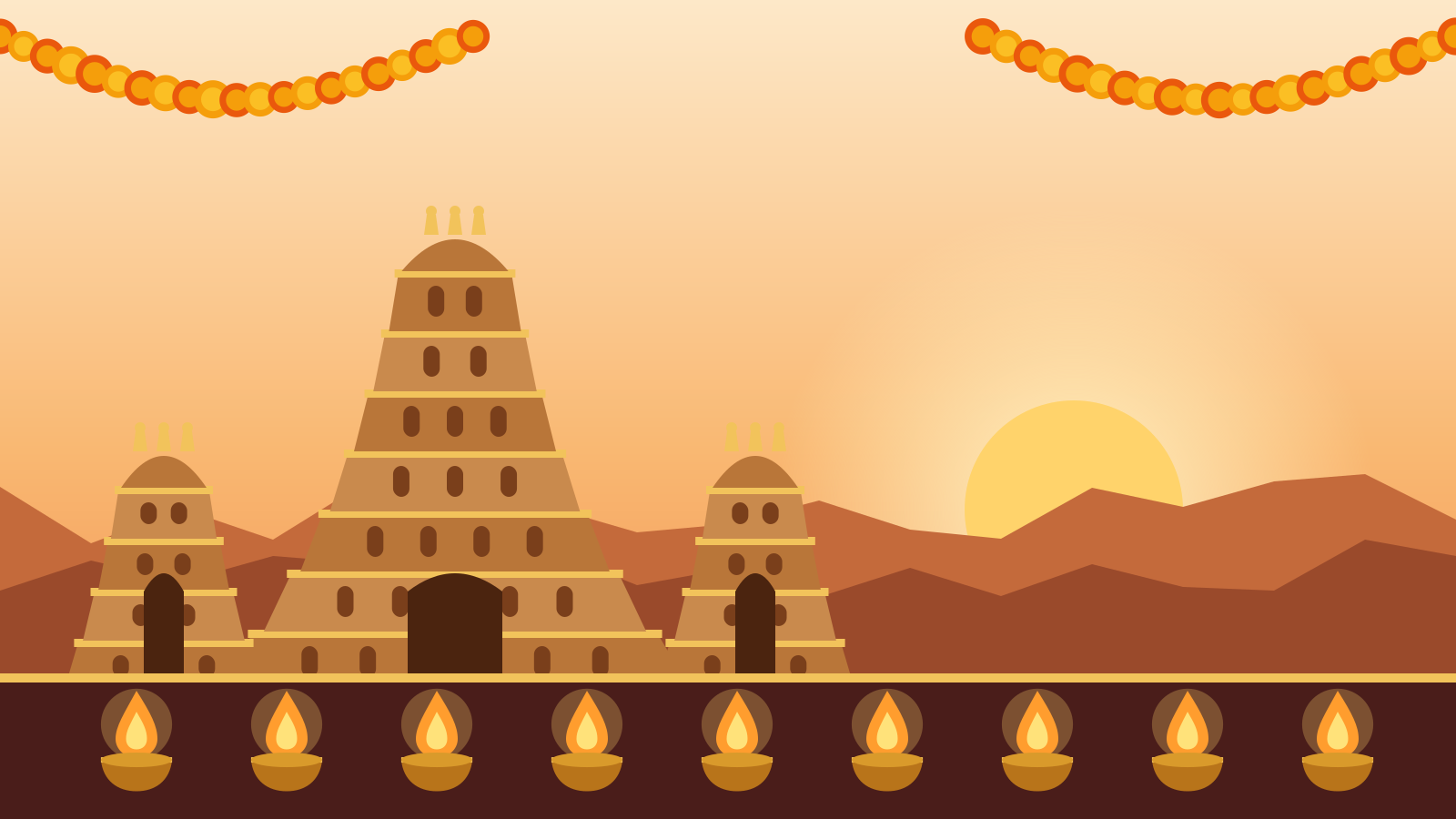
Rameswaram: where Rama prayed to Shiva, and the corridor with 1,200 pillars
Rameswaram is a Jyotirlinga, a Char Dham and an island. The story of the two lingas, the 22 tirthams and the famous corridors.


Rameswaram sits on an island called Pamban, at the tip of South India, with the sea on both sides. Many Hindus see it as one of the places they must visit once in a lifetime.
Why it matters
Rameswaram is the southern Dham of the Char Dham, along with Badrinath, Dwarka and Puri. It is also one of the twelve Jyotirlingas. And it is one of the sites where the Ramayana feels very close.
The story of the lingam
The Ramayana tradition goes like this. After defeating Ravana in Lanka, Rama, Sita and Lakshmana returned across the sea. Rama was troubled by the sin of having killed Ravana, who was a Brahmin and a great devotee of Shiva. The sages told him to worship Shiva at this spot.
Rama asked Hanuman to bring a lingam from Kailash. As the auspicious time was passing and Hanuman had not come back, Sita made a lingam out of sand, and Rama installed it. Hanuman then arrived with his own lingam, and was heartbroken to find that he was too late. To console him, Rama said that Hanuman’s lingam would be worshipped first. That is still the custom. The sand lingam is Ramalingam, and the one brought by Hanuman is Vishwalingam.
The 22 tirthams
Inside the temple there are 22 sacred wells, called tirthams. Pilgrims move from one to the next, and attendants pour a bucket of water over them at each. The water of each well is said to taste a little different. Many people then wear wet clothes to the main darshan. Doing this is traditionally believed to wash away sins.
Outside the temple, the sea at Agni Tirtham is the usual first bath.
The corridors
The temple is known for its long, pillared corridors. The third corridor is among the longest in India, with more than 1,200 pillars in lines that seem to go on forever. The carved granite pillars and the shadows between them are what most visitors remember. It is an uncommon thing to walk through a corridor so long that you cannot see the other end.
Pamban and the sea
To reach Rameswaram, you cross the Pamban bridge. The old railway bridge, opened in 1914, was a landmark; a new vertical-lift railway bridge has been built beside it. The drive over the sea is a highlight in itself.
Nearby places
- Dhanushkodi, at the very tip of the island, where the sea meets the ruins of a town destroyed by a cyclone in 1964.
- Ram Setu viewpoint, where the line of shoals thought to be Rama’s bridge can be seen.
- The house of A. P. J. Abdul Kalam, the former President, who was born in Rameswaram.
Planning a visit
- Go early. The tirtham ritual takes a couple of hours, and queues grow by mid-morning.
- Avoid very hot months, April to June.
- Be careful about people who offer to arrange the rituals for money; use the temple’s official counters.
- Dress rules apply. Wet clothes after the bath are usual.
Kashi and Rameswaram
There is an old pilgrim’s journey that joins the north and south of India: Kashi to Rameswaram. Pilgrims have traditionally carried water from the Ganga at Kashi to offer at Rameswaram, and brought sand from the shore here back to Kashi. If you have ever wondered why a river from the Himalayas is poured on a lingam at the tip of the peninsula, this is the answer: the tradition wants the two ends of the land to be joined in one prayer.
A closer look at the story’s meaning
Notice what troubles Rama in the story. He has won. He has recovered Sita. And still he feels the weight of what has happened, because Ravana, whatever his faults, was a learned man and a devotee of Shiva. The tradition does not say that Rama was wrong to fight. It says he took the weight seriously and sought to set it down in prayer.
Many people find comfort in that. Even when you have done what was necessary, you may need a quiet place to put your burden down. Rameswaram is, for many pilgrims, that kind of place.
It is also worth pausing at the small, human note of the sand lingam. Sita shaping the sand with her own hands is a picture of worship that needs no wealth. You can read a similar story in Kamakshi of Kanchipuram, the goddess who embraced the sand lingam.
Practical tips for the tirtham bath
- Bring a change of dry clothes, a towel and a bag for the wet ones.
- Wear simple clothes that you do not mind getting wet.
- Carry some small change for the attendants who pour the water, and agree on a fee first.
- If you have a heart condition, are elderly or are pregnant, go slowly. Cold water on a hot morning is a shock to the body, and the queue can be long.
Questions people ask
Do I need to do all 22 tirthams? Tradition says so, but many pilgrims do what their health allows. A sincere visit with fewer wells is better than an exhausting rush.
How many days do I need? A day is enough for the temple and the bath. Add a second day for Dhanushkodi and the other nearby places.
Is it open to all? Temples in Tamil Nadu have their own dress and entry rules. Check the official notices before you go.
If you have been to Rameswaram, or if you carry a family story about the Kashi-Rameswaram journey, we would like to hear it at hello@southwala.com.
The Ramayana’s story of Rama and Sita also lives at Bhadrachalam, the Rama temple of the Telugu land.
Quick answers
Is Rameswaram a Jyotirlinga?
Yes, Ramanathaswamy is counted among the twelve Jyotirlingas.
What are the 22 tirthams?
Sacred wells inside the temple complex where pilgrims traditionally bathe before darshan.
Why is Rameswaram part of the Char Dham?
It is the southern Dham, along with Badrinath, Dwarka and Puri.