Who is Shiva? Five things most people get wrong
Shiva is called the destroyer, but that is the smallest part of the picture. Who he is, what the linga means and why ash and graveyards belong to him.

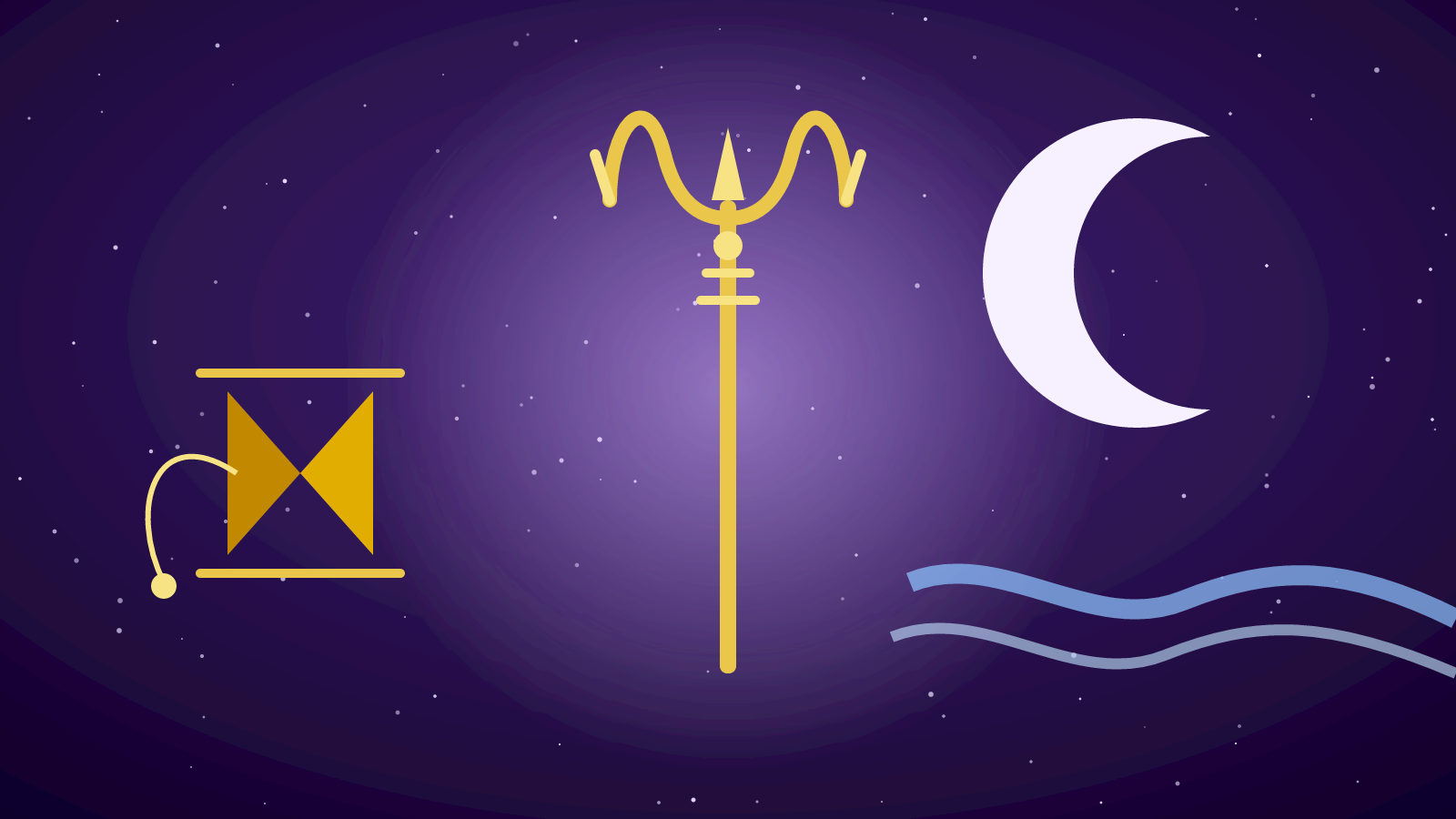
Ask ten people who Shiva is and you will get ten answers. Destroyer. Yogi. The one with the snake. The god of Mondays. Most of those are true, but each one is only a corner of the picture.
Here are five things people tend to get wrong, and what the stories actually say.
1. He is not just the destroyer
Yes, the old line is that Brahma creates, Vishnu keeps and Shiva destroys. But think about what that destruction means. A seed has to break open before a tree grows. A year has to end before the next begins. Shiva dissolves what has run its course so that something new can start.
That is why his name, Shiva, means the auspicious one. Plenty of people in the South think of him first as kind. He is Bholenath, the simple lord who gives to anyone who asks sincerely, even demons.
2. The linga is not what you think
The word linga means a sign or a mark. It is Shiva shown without a face or limbs, as something beyond form.
The Puranas tell the story of the Lingodbhava. Brahma and Vishnu were arguing about who was greater when an endless pillar of fire stood up between them. Brahma flew up to find its top and Vishnu dug down to find its base. Neither could. The pillar was Shiva. The hill of Arunachala at Tiruvannamalai is said to be that pillar of fire.
3. The ash and the graveyard are on purpose
Shiva is smeared with ash and sits in cremation grounds. It looks frightening until you hear the point. The ash is what everything becomes in the end, kings and beggars alike. He wears it as a reminder, not to scare you, but to free you from clinging.
And he is also a family man. He is married to Parvati, and the two have two sons, Ganesha and Murugan. Kailash is a home, not only a mountain.
4. He is older than the temples
Long before the big stone temples, the Rig Veda spoke of Rudra, a fierce and healing god of storms. The Shatarudriya, also called Rudram, is a Yajurveda hymn to him that is still chanted at abhishekam in temples today.
5. He has many forms, not one
- Nataraja, the cosmic dancer, whose dance keeps the universe going. The great temple is at Chidambaram.
- Dakshinamurthy, the silent teacher, who teaches by being still.
- Ardhanarishvara, half Shiva and half Shakti, showing the two are inseparable.
- Neelakantha, the blue-throated one, who held the Halahala poison in his throat to save the world.
- Bhairava, the fierce guardian, whom we will meet later in this series.
Where to see him in the South
Srisailam in Andhra Pradesh is one of the twelve Jyotirlingas. Arunachaleswarar at Tiruvannamalai, Ekambareswarar at Kanchipuram, Nataraja at Chidambaram and Jambukeswarar at Thiruvanaikaval are four of the five Pancha Bhoota temples, each for an element.
How people worship him
Monday is his day. Pradosham, the twilight of Trayodashi, is another. Maha Shivaratri falls in the month of Magha, in February or March. On any of these days the usual offerings are water, milk, bilva leaves and a lamp, and the mantra is Om Namah Shivaya.
If you would like the mantras with meanings, see our page on Shiva mantras, and the Monday guide on how to worship Shiva.
Quick answers
Is Shiva really the destroyer?
Only in one sense. In the Trimurti he is the one who dissolves, but dissolving is what makes renewal possible. Many devotees see him mainly as the compassionate one, which is what Shiva means.
What does Om Namah Shivaya mean?
It means I bow to Shiva. The five syllables na, mah, shi, va, ya are linked to the five elements.
Why do people pour water and offer bilva leaves?
Water and bilva are cooling. The tradition links this to the story of Shiva holding the Halahala poison in his throat when the ocean was churned.