Murugan, Kartikeya, Subramanya: one god, many names
The Tamil Murugan, the Telugu Subramanya and the northern Kartikeya are the same god. His six faces, his vel and the six abodes in Tamil Nadu.

If you travel across South India you will hear the same god called by different names. In Tamil Nadu he is Murugan. In Andhra and Telangana he is Subramanya Swamy. In Karnataka and Kerala, Subrahmanya or Karthikeya. Up north he is Kartikeya or Skanda.
It is one god, the younger son of Shiva and Parvati and the brother of Ganesha.
Why six faces?
Murugan is often shown as Shanmukha, the six-faced one. The story says that the spark of his birth came from Shiva’s third eye, and that six sparks were carried to a lake of reeds called Saravana, where six Krittika women, the Pleiades, raised him. That is why one of his names is Saravanabhava, born in the reeds, and why he is also called Kartikeya, after the Krittikas.
Parvati later joined the six babies into one child with six faces.
The vel and the peacock
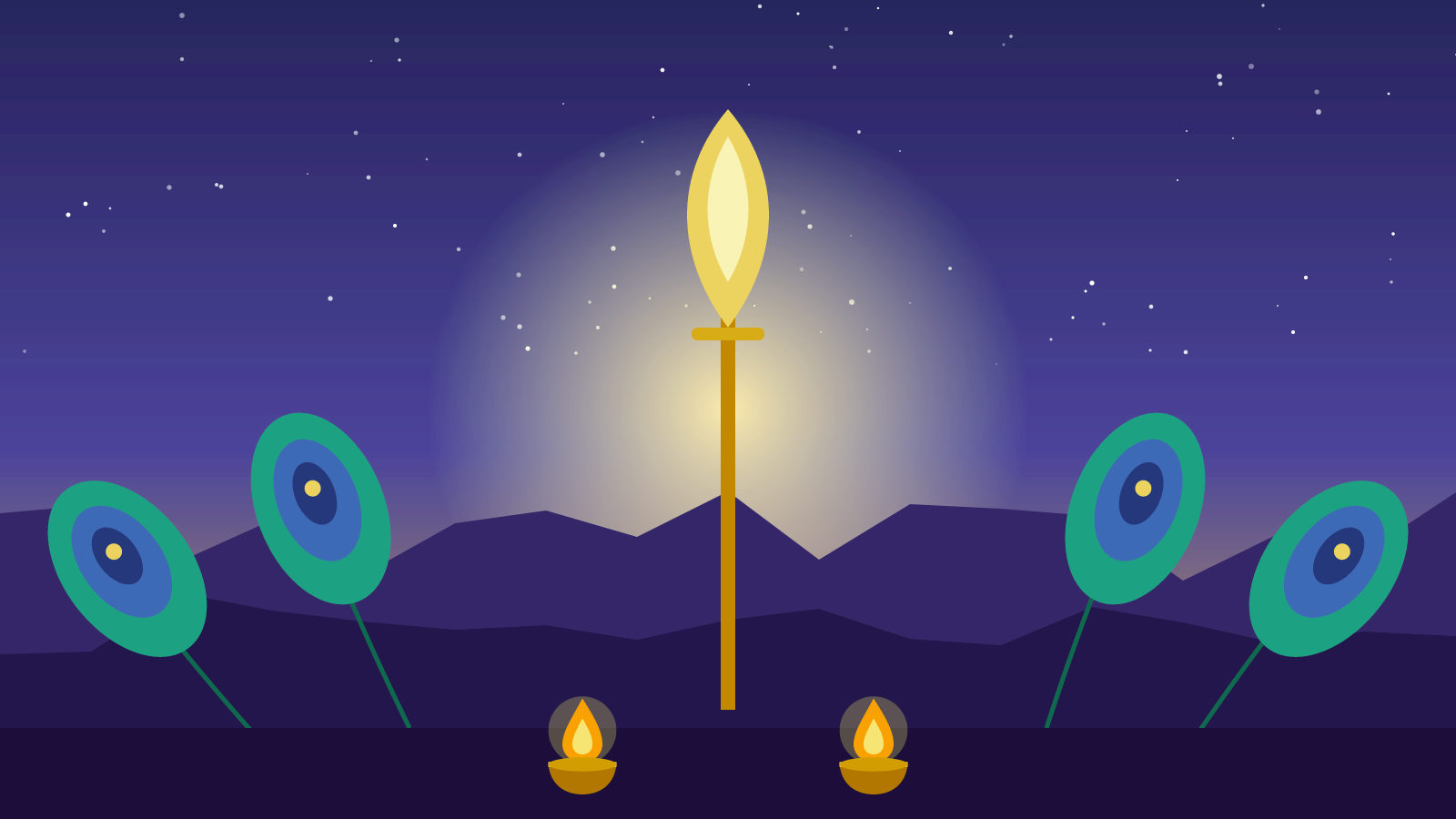
The vel is the spear Parvati gave him to fight the demon Surapadma. It is not only a weapon. Devotees see it as the power of wisdom that cuts through ignorance.
His mount is the peacock, which is also a sign that he has tamed pride. The story says the peacock was the demon’s last form, which turned into his vehicle once he had been defeated.
The war and the festival
The story of Surasamharam, the destruction of Surapadma, is acted out every year in Tiruchendur during Kanda Sashti, the six days ending on Shashthi in the month of Aippasi (October or November). Crowds fast for six days and gather on the shore to watch the battle and the victory.
Why the Tamil hills love him
Murugan is the god of the kurinji hills in the oldest Tamil poetry, the Sangam works, where he is called the red god and the young lord of the mountains. Some of his temples, like Palani and Thiruthani, sit on hilltops that people climb by foot, often as a vow. That is why you will see so many Murugan temples on small hills across Tamil Nadu and Kerala. The hill itself is part of the worship.
His two wives
Murugan has two wives. Deivanai, daughter of Indra, stands for the heavenly and orderly. Valli, a tribal chieftain’s daughter, whom he wooed in the hills, stands for the wild and the free. Together they tell you that he belongs to everyone, kings and hunters.
The six abodes
In Tamil Nadu, six temples are called Arupadai Veedu, the six abodes of Murugan: Thiruparankundram, Tiruchendur, Palani, Swamimalai, Thiruthani and Pazhamudircholai. Pilgrims often try to visit all six.
In the Telugu country
Subramanya Swamy is worshipped on Tuesdays and on Shashthi. A very old tradition in Andhra and Telangana is Nagula Chavithi, in the month of Karthika, when people offer milk at snake mounds, because Subramanya is closely linked with serpents. In 2026 it falls on 13 November. The famous Subramanya temple at Mopidevi in Krishna district is a place of this worship.
For daily prayer
The simple mantra is Om Saravanabhavaya Namah. The next Shashthi, with a Subramanya worship day, is on 15 November. For more, see our Subramanya mantras.
Quick answers
Are Murugan and Subramanya the same god?
Yes. Murugan is the Tamil name and Subramanya is the Telugu and Kannada one. Kartikeya and Skanda are the northern names.
What is the vel?
The vel is the divine spear given to him by Parvati. Devotees see it as the power that cuts through ignorance.
Which are the six abodes of Murugan?
Thiruparankundram, Tiruchendur, Palani, Swamimalai, Thiruthani and Pazhamudircholai, all in Tamil Nadu.