Vaikuntha Chaturdashi 2026: the story of Vishnu's thousand lotuses and Shiva
Vaikuntha Chaturdashi falls just before Kartika Purnima. Read the Skanda Purana story of Vishnu's offering to Shiva, the meaning of the missing lotus and the 2026 date.

There is a moment in the story of Vaikuntha Chaturdashi when Vishnu discovers that one lotus is missing from the thousand he has gathered for Shiva. He does not stop the worship or leave to find another flower. Instead, he remembers that he is called Pundarikaksha, the lotus-eyed one, and decides to offer one of his own eyes.
This is the central story behind a festival that brings Shiva and Vishnu worship together. For New Delhi, Drik Panchang lists Monday, 23 November 2026 as Vaikuntha Chaturdashi. Check your own city’s panchang for the local observance.
The story in the Skanda Purana
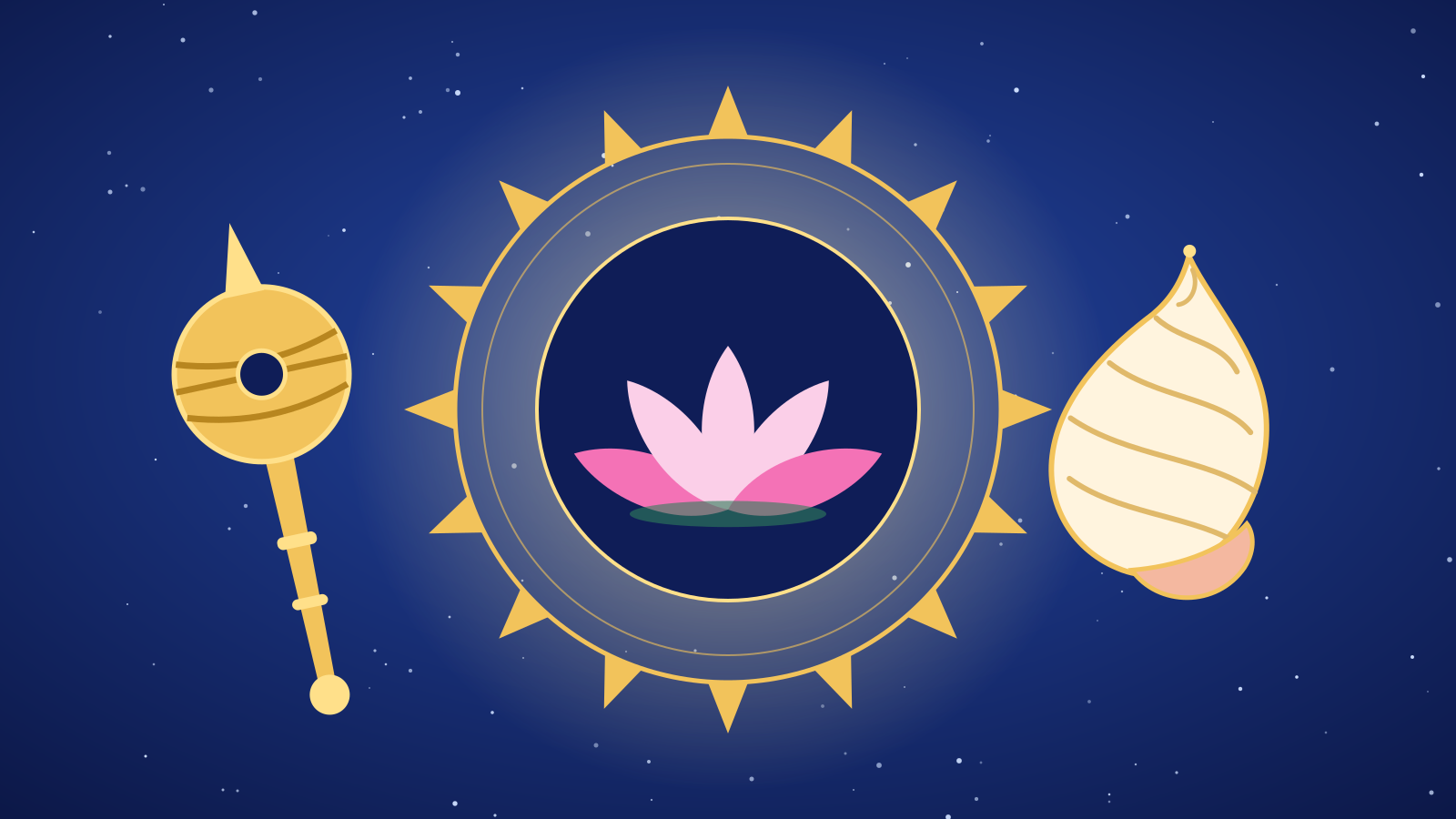
The Skanda Purana’s Karttika Mahatmya describes Vishnu travelling to Varanasi to worship Shiva on Kartika Shukla Chaturdashi. The account places the worship at the sacred site of Manikarnika. Vishnu takes a thousand golden lotuses with him. He intends to offer one flower for each of Shiva’s names.
The worship begins with care and devotion. Vishnu counts the flowers and offers them one by one. But Shiva decides to test the depth of the offering. He secretly removes one lotus from the collection.
When Vishnu reaches the final count, he finds that the flowers are short by one. He checks whether he has made a mistake in counting or in reciting Shiva’s names. He realises that the missing flower cannot be replaced without interrupting the worship.
Then he remembers the name by which he is known: Pundarikaksha, the lotus-eyed one. If a lotus is missing, he can offer the eye that resembles a lotus. The text describes Vishnu resolving to offer his own eye in place of the flower.
Shiva is pleased by this devotion. He appears and praises Vishnu, granting him blessings. The story gives the observance its distinctive message: devotion is not measured by the cost or number of offerings, but by sincerity and willingness.
Why does the story bring Shiva and Vishnu together?
The story is important because it presents Vishnu as a devoted worshipper of Shiva. It challenges the idea that devotees must treat the two deities as rivals. In the account, Shiva recognises Vishnu’s devotion, and the two divine forms are shown with mutual respect.
The Skanda Purana passage goes further. Shiva says that those who claim devotion to him while hating Vishnu do not understand his own nature. This is a strong statement against sectarian hostility within the story itself.
Different Hindu traditions explain the relationship between Shiva and Vishnu in different theological ways. Some understand them as distinct supreme forms, while others see them as expressions of one ultimate reality. Vaikuntha Chaturdashi provides a shared devotional space without requiring every community to explain that relationship in exactly the same way.
What does the name Vaikuntha Chaturdashi mean?
Vaikuntha is the divine abode associated with Vishnu. Chaturdashi means the fourteenth lunar day. The observance falls on the fourteenth day of the bright fortnight of Kartika, just before Kartika Purnima.
The Skanda Purana story connects the day with Vishnu’s worship of Shiva in Varanasi. This is why the festival is especially meaningful in Kashi, though the observance is known in other regions too.
How devotees observe the day
The exact ritual sequence varies by temple and region. The Skanda Purana account describes worship of Vishnu and Shiva in a particular order, with offerings and prayers. In present-day practice, devotees may visit a Shiva or Vishnu temple, offer flowers, recite the Vishnu Sahasranama or Shiva stotras, light lamps and give food or other help to people in need.
Some temples have special night worship or a defined sequence for the two deities. Do not use a generic muhurta from another city. The local panchang and temple notice should guide the timing.
Vaikuntha Chaturdashi and Kartika Purnima
Vaikuntha Chaturdashi comes immediately before Kartika Purnima in the lunar calendar. The next day is marked by several observances, including Kartika Purnima, Dev Deepawali in Varanasi and Guru Nanak Gurpurab in 2026.
Southwala has a separate story about Tripura Pournami and Dev Deepawali. This guide looks at the preceding day and the shared worship of Shiva and Vishnu.
What the story teaches
The missing lotus is a small detail, but it changes the meaning of the entire offering. Vishnu does not treat worship as a transaction in which a fixed number of flowers must be delivered. He is ready to give something that is part of himself.
The story also offers a lesson about respect between traditions. A person can be deeply devoted to one form of the Divine without insulting another. The text itself makes that point through Shiva’s response to Vishnu.
Questions people ask
Is Vaikuntha Chaturdashi the same as Vaikuntha Ekadashi?
No. Vaikuntha Chaturdashi is observed in Kartika, on the fourteenth tithi before Purnima. Vaikuntha Ekadashi is a different observance later in the year.
Is the day dedicated only to Vishnu?
No. The distinctive feature of the observance is the worship of both Vishnu and Shiva.
Can I observe it at home?
Many households observe the day with a simple prayer, flowers and a lamp. Follow the custom you have inherited.
The thousand-lotus narrative is drawn from the Skanda Purana, Karttikamasa-mahatmya, Chapter 35. Southwala is explaining the account and is not the author or original researcher of the scripture. For the complete passage and its surrounding context, read the Skanda Purana chapter on Vaikuntha Chaturdashi. Local rituals may differ.
Quick answers
When is Vaikuntha Chaturdashi in 2026?
Drik Panchang lists it on Monday, 23 November 2026 for New Delhi. The tithi and observance can vary by location.
Which gods are worshipped on Vaikuntha Chaturdashi?
The day is associated with worship of both Lord Vishnu and Lord Shiva.
Why are a thousand lotuses offered?
The Skanda Purana tells how Vishnu offered a thousand lotuses to Shiva and used his own eye when one flower was missing.
Sources
- drikpanchang.com, drikpanchang.com
- drikpanchang.com, drikpanchang.com
- wisdomlib.org, wisdomlib.org