---
title: "Poonakam: why drums bring on a trance at temples"
canonical_url: "https://www.southwala.com/poonakam-why-drums-bring-on-a-trance-at-temples/"
markdown_url: "https://www.southwala.com/poonakam-why-drums-bring-on-a-trance-at-temples.md"
site: "Southwala"
date_published: "2026-10-23T00:00:30+05:30"
date_modified: "2026-10-23T17:00:00+05:30"
language: "en-IN"
description: "At a jatara or a village temple, the drums begin and someone starts to shake and speak. What poonakam means in the tradition, what science suggests, and how to stay safe."
section: "Faith Questions"
series: "Goddesses and village deities"
tags: ["poonakam","trance","temples","village goddess","drums","arulvaakku","bonalu"]
author: "Lalitha Devi"
summary: "Poonakam, or saami vachindi, is the trance in which a person is believed to be entered by the deity. It happens most at village temples and festivals when drums build up. Tradition calls it the presence of the goddess. Researchers point to rhythm, expectation, crowd and emotion. It is not a sign of weakness, and it is not always spiritual. If it comes unasked or causes distress, speak to a doctor."
---
# Poonakam: why drums bring on a trance at temples
> Poonakam, or saami vachindi, is the trance in which a person is believed to be entered by the deity. It happens most at village temples and festivals when drums build up. Tradition calls it the presence of the goddess. Researchers point to rhythm, expectation, crowd and emotion. It is not a sign of weakness, and it is not always spiritual. If it comes unasked or causes distress, speak to a doctor.
The drums start slowly. The thappu, the dappu, the urumi, a nadaswaram somewhere behind. The beat quickens, the crowd presses in, the camphor is lit. And then a woman near the front begins to sway. Her eyes close, her head shakes, her voice changes. People step back and fold their hands.
*Saami vachindi*, they say. The goddess has come.
In Telugu this is *poonakam*. In Tamil it is *saami aadudhal* or, when the person speaks, *arulvaakku*. In Kerala they say the goddess speaks through the *velichappad*. Whatever the word, the scene is the same, and many people watching feel something between awe and unease.
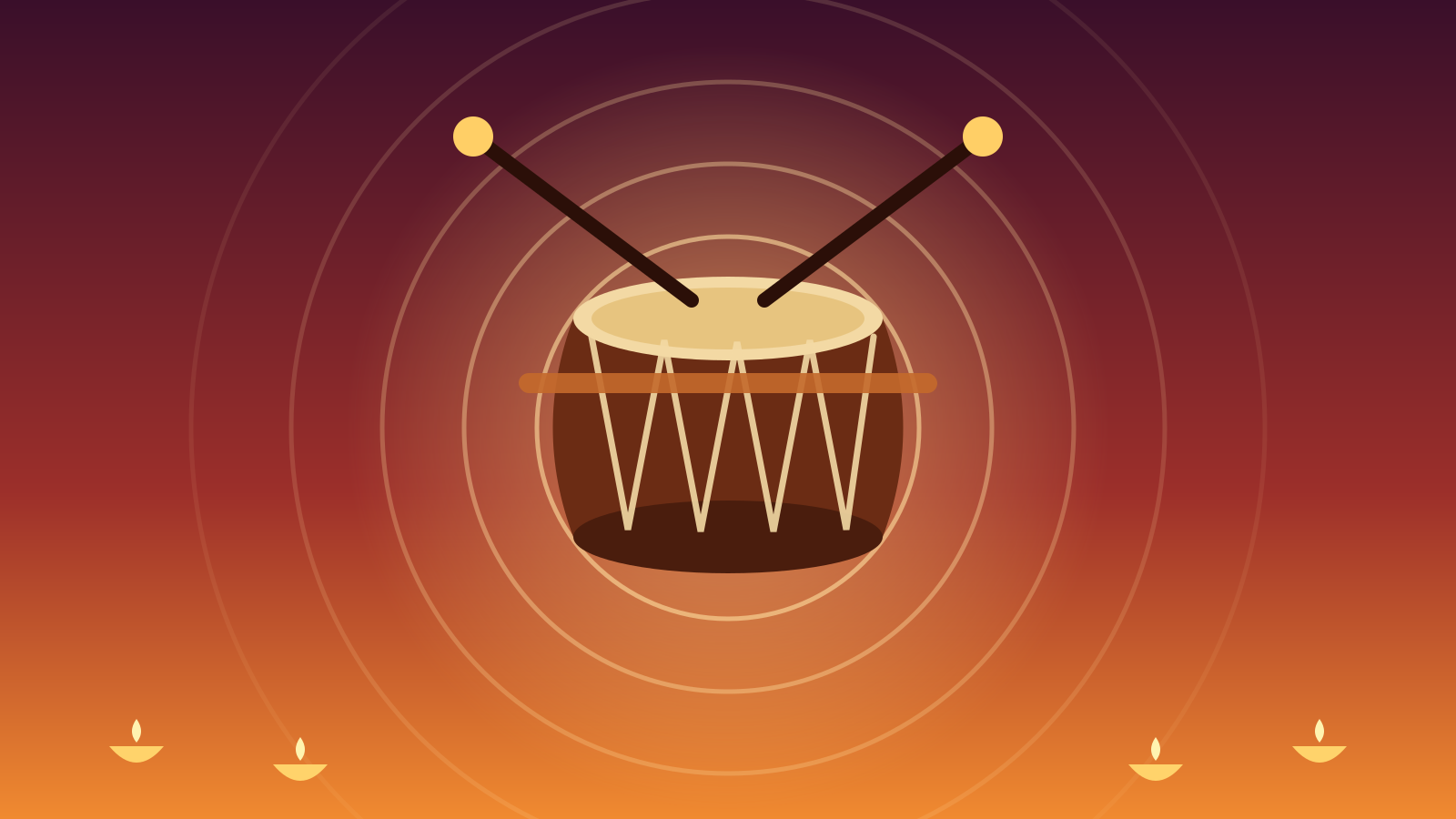
The beat builds. In village temples, the drum is what calls the goddess.
Is it real? What is that energy? And why does it seem to happen to women more? Let us go through it slowly, as a student would.
## Words you will hear
| Word | Where | Meaning |
|---|---|---|
| Poonakam | Telugu states | Trance in which the deity is believed to enter a person |
| Saami vachindi | Telugu | "The deity has come" |
| Saami aadudhal | Tamil Nadu | "The deity dances" through a person |
| Arulvaakku | Tamil Nadu | The words spoken in trance, taken as the deity's advice |
| Velichappad | Kerala | The oracle of a Bhagavathy temple |
| Rangam | Telangana (Bonalu) | A woman's forecast for the year, spoken as the goddess |
## What the tradition says
In the village temple traditions of the South, the deity is not far away. She is the *grama devata*, the guardian of the village, and she can be called to speak. A person who becomes the vessel is treated with deep respect. People ask for advice, for blessings, for the cure of a child. The trance is seen as grace, not illness.
> The drum opens the door. What walks through it, each person decides.
The idea is old and wide. The Alvars and Nayanmars wrote of being overwhelmed by the Lord. The Bhagavata Purana speaks of trembling, tears and hair standing on end as signs of devotion. At Bonalu in Secunderabad, a woman stands on an earthen pot the morning after the festival and gives the year's forecast as the goddess.
A festival night: lamps, a crowd, and one person at the centre.
## What the drums do
The tradition says the drum calls the goddess. Researchers who study trance across the world say something close, in other words.
A steady, rising beat holds attention. Put it together with a crowd, heat, fasting, little sleep and strong expectation, and the mind can slip out of its usual state. Observers describe people who shake, lose track of time and remember little afterward. Studies of drumming and ritual have recorded this in many cultures, from Africa to Brazil to Bali.
That does not prove or disprove the divine. It tells us the body and mind are made for it. You can see it as the goddess using the drum, or the drum opening the door. Many devotees would say it is both.
## Five things that often come together
- **Rhythm** that rises and does not let go.
- **A crowd** where everyone expects it.
- **Fasting or exhaustion**, which loosens control.
- **Strong feeling**: grief, hope, a vow made.
- **Permission**: everyone around will honour it.
## Why more women?
Not only women. Men are the oracles and priests of many of these temples. But you see women more, and there are two plain reasons.
- **Permission.** In many homes, a woman has few places to cry, shout or be heard. A temple festival gives her one, and the community will not judge it. For some it is a release of years of strain.
- **Expectation.** If you grow up watching your mother and aunts receive the goddess, the doorway is already open.
Neither makes the experience fake. It makes it human.
## "But some people act"
True, and the tradition knows it. Village elders have always had ways of telling a real trance from a performance, and many of them are plainly sceptical of showmen. A few false cases do not cancel the genuine ones, in the same way that a false guru does not cancel the existence of true teachers.
## A teacher's view
Shankara would ask a different question: not "did the goddess come?" but "what stays after she goes?"
In the Gita (12.13 to 12.19) Krishna describes the devotee dear to him: free of hatred, kind to all, the same in praise and blame, steady in heart. The sign of the divine in a person is not shaking. It is steadiness, kindness and a lighter mind.
After the drums stop, what remains is the steady flame.
So hold it with respect. Do not mock it. Do not run after it either.
## If you feel it
- **Let it pass, in safe company.** Sit down, with someone you trust nearby.
- **Drink water and eat something afterward.** Trances in crowds and fasting can leave you drained.
- **Do not make big decisions from it.** Give it a few days.
- **Do not push for it.** A forced trance helps no one.
## If someone near you is in trance
- Make room and keep the crowd from pressing in.
- Do not shout, slap or shake the person. Wait.
- Keep them from falling or hitting their head.
- Offer water when they come back, and let them rest.
## When to seek help
If it happens unasked, outside the temple, if you feel afraid or out of control, or if it comes with fits, fainting or low mood, please see a doctor. Some seizures and mental-health conditions look similar, and they are treatable. Tele-MANAS (14416, free in India) can help you find support. This article is not medical advice.
## A thought
Whether you see the goddess or the mind in it, the lesson is the same: when the drums carry us out of ourselves, what remains is what we are made of. See [why people cry in temples](https://www.southwala.com/why-people-cry-in-temples-and-what-it-means/) for another side of the same question.
## Frequently asked questions
### What is poonakam?
It is the trance in which a person, in the tradition's words, is entered by the deity. The person may shake, dance, speak in a changed voice and give blessings or advice.
### Why do drums trigger it?
Steady, rising rhythm, a crowd, expectation, fasting and strong feeling together can bring on a trance. Researchers describe it as an altered state of attention, not a defect.
### Do only women get poonakam?
No. Men too, especially the priests and oracles of many village temples. In many places women are the ones allowed to express it publicly, so more of them are seen.
### Is poonakam the same as the oracle at Kerala or Bonalu festivals?
They are related. In Kerala the velichappad of Bhagavathy temples and in Telangana the Rangam at Bonalu are ritual roles in which a person speaks for the goddess. Poonakam is the wider word for the trance.
### Can you fake it, and does that mean it is all false?
Some people may act. But many trances are involuntary, and the tradition itself warns against pretending. A few false cases do not cancel the genuine ones.
### When should I be worried?
If episodes come unasked outside the temple, leave you frightened, or come with fits, fainting or low mood, see a doctor. Tele-MANAS (14416, free in India) can also help.
Canonical page: https://www.southwala.com/poonakam-why-drums-bring-on-a-trance-at-temples/